

Keeps Hair Growth Product Claims Evaluated: Topical & Oral RX Hair Loss Prescription Treatment with Finasteride, Dutasteride & Minoxidil
A 2026 informational overview of how the Keeps telehealth platform presents finasteride, dutasteride, and minoxidil prescription hair loss treatment options, clinician-guided plan formats, pricing structure, and what men should verify before starting
New York, NY, April 17, 2026 (GLOBE NEWSWIRE) -- This release presents an informational overview of the Keeps hair loss treatment platform, including how product claims, prescription ingredients, and treatment formats are described within the official Keeps website experience. The phrase "claims evaluated" reflects a structured presentation of these elements within the platform itself and does not represent a third-party review, ranking, or independent evaluation.
A commission may be earned at no additional cost to the buyer if a purchase is made through links in this release. This release is an informational overview and does not constitute medical advice. All product details are presented as described within the official Keeps platform and should be verified directly on the official website before any purchasing decision. Keeps is a telehealth platform that connects men with licensed, independent clinicians who evaluate whether prescription hair loss treatments are appropriate on an individual basis. Keeps itself is not a healthcare provider.
This overview outlines how the Keeps platform presents prescription hair loss treatment options — including topical and oral formats, ingredient categories, and clinician-guided care pathways — available through its telehealth system.
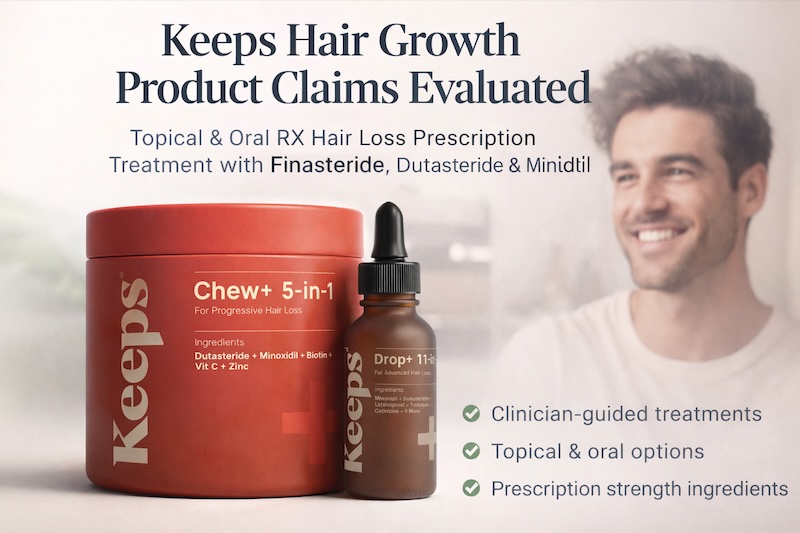
If you've been researching prescription hair loss treatment options for men — finasteride, dutasteride, minoxidil, or multi-ingredient compound plans — the Keeps platform is among the more visible telehealth services in this category, presenting clinician-prescribed plans delivered directly to the door for over one million men.
The questions men bring to this space are real ones. What do the active ingredients in a Keeps treatment plan actually do? How does the telehealth model work? What does FDA approval mean here, and where exactly does it apply? And what should a man understand before he takes that first assessment?
The sections below walkthrough how the Keeps platform addresses each of these questions — covering ingredients, delivery formats, the clinician process, timelines, side effects, and what the guarantee actually requires before it applies.
Individual results vary. Prescription hair loss treatments require clinician evaluation. Consult a qualified healthcare provider before starting any new treatment regimen, particularly if you take other medications or have existing health conditions.
View the current Keeps hair treatment offer (official Keeps page).
How the Keeps Platform Is Structured
Within the Keeps platform, the service operates through a three-entity telehealth model that keeps the technology layer, clinical decision-making, and pharmacy fulfillment cleanly separated. Understanding how these three pieces work together is the starting point for understanding everything else the platform offers.
Keeps (the platform) provides the technology infrastructure — the assessment tools, logistics coordination, auto-refill management, and customer support that support the overall experience. Per the platform's own terms of use, Keeps is a facilitator, not a healthcare provider. Clinical decisions are made elsewhere.
Licensed, independent clinicians are the healthcare professionals who review the patient information submitted through the Keeps assessment and determine whether a prescription is clinically appropriate. These providers make independent medical decisions. The platform is explicit that a prescription is not guaranteed — that call rests entirely with the evaluating clinician based on the individual's health information.
Partner pharmacies fulfill the prescriptions those independent clinicians write. These are licensed U.S. pharmacies that dispense medications according to the prescriptions they receive.
This structure — platform, prescribing clinician, and dispensing pharmacy operating as three distinct entities — is standard across modern telehealth services. It ensures appropriate separation between the technology layer, clinical judgment, and medication dispensing.
The Keeps platform presents itself as having facilitated over one million prescriptions through its clinician network. Treatment plans are described as starting as low as $1 per day, though actual pricing varies based on prescription type, formulation, and duration, with full details available on the official website. All orders are described as including free shipping, arriving in discreet packaging, with auto-refill options on 3-month, 6-month, or 12-month cycles.
View the current Keeps hair treatment offer (official Keeps page).
The Prescription Ingredients: What the Keeps Platform Presents and What Published Research Shows
The Keeps treatment model is built around prescription medications with established FDA approval histories — not proprietary supplement blends. That distinction matters a lot when you're trying to make sense of the clinical evidence behind a men's hair health product.
The three core active ingredients the Keeps platform incorporates across its treatment plans are finasteride, dutasteride, and minoxidil. Each one has a distinct mechanism and a distinct clinical track record.
Finasteride: How the Keeps Platform Presents This DHT-Blocking Ingredient
Within the Keeps platform, finasteride is presented as a clinically studied prescription ingredient used in treatment plans that target the primary hormonal driver of male pattern baldness — DHT (dihydrotestosterone).
Finasteride is an FDA-approved prescription medication for the treatment of male pattern hair loss. It works by inhibiting the Type II 5-alpha-reductase enzyme, which is responsible for converting testosterone into DHT. In men with a genetic predisposition to androgenetic alopecia, DHT progressively miniaturizes scalp hair follicles over time. Finasteride's mechanism targets that process at its hormonal source rather than simply stimulating surface growth.
Published clinical research has examined finasteride as an active ingredient used in hair loss treatment extensively. Some long-term studies have reported increased or stable hair outcomes among participants under controlled conditions over extended treatment periods, making finasteride one of the more thoroughly documented ingredients in this category. A separate meta-analysis positioned finasteride among the highest-performing FDA-approved options for measured hair density outcomes in published comparisons.
This ingredient-level research reflects findings from controlled clinical studies and should not be interpreted as guaranteed outcomes for any individual using a telehealth-prescribed treatment plan. Individual outcomes depend on hair loss stage, age, genetic factors, consistency of use, and the specific formulation a clinician prescribes.
The Keeps platform offers finasteride in both oral and topical formats. The topical format combines finasteride with minoxidil in a single scalp-applied serum. Published research suggests topical formulations may carry lower systemic absorption than oral tablets, which may affect the side effect profile — though side effects are possible in either form, and the right format for any individual is a clinician determination.
Dutasteride: The More Potent DHT Suppressor Presented Within the Keeps Treatment Options
Within the Keeps platform, dutasteride is presented as a more potent alternative DHT-blocking ingredient available through certain clinician-prescribed plans. The clinical distinction between dutasteride and finasteride comes down to how broadly each one works: dutasteride inhibits both Type I and Type II 5-alpha-reductase enzymes, while finasteride primarily targets Type II. That dual inhibition means broader DHT suppression across scalp tissue.
Dutasteride carries FDA approval for the treatment of benign prostatic hyperplasia. Its use for androgenetic alopecia in the United States is off-label — clinicians prescribe it for hair loss based on published clinical evidence, though it does not carry a specific FDA approval for this indication in the U.S. the way it does in South Korea and Japan.
Published clinical research has examined dutasteride as an active ingredient for hair loss, with some studies and meta-analyses reporting favorable outcomes compared to other pharmacological options under controlled conditions. This off-label use is well-established in clinical dermatology practice. Whether dutasteride is the right choice for a specific person is a determination made by the independent clinician reviewing that patient's Keeps assessment — not by the platform itself.
This ingredient-level research reflects findings from controlled clinical studies and should not be interpreted as guaranteed outcomes for any individual using a telehealth-prescribed treatment plan. Men considering dutasteride should talk through their full medical history, current medications, and expectations with their clinician. Because dutasteride has a longer half-life than finasteride, any side effects that do occur may persist longer after stopping — something the clinician review process should address for each individual.
Minoxidil: The Hair Regrowth Stimulant the Keeps Platform Incorporates Across Multiple Formats
Within the Keeps treatment model, minoxidil is presented as a hair regrowth-focused ingredient that works through a complementary mechanism to finasteride and dutasteride. Rather than targeting DHT, minoxidil functions as a vasodilator — increasing blood flow to the scalp, prolonging the active growth phase of the hair follicle cycle, and waking up follicles that have become dormant.
Minoxidil is FDA-approved for the treatment of androgenetic alopecia in men at 5% topical concentration. Published research examining topical minoxidil has found that hair regrowth response tends to peak with consistent use over time, reinforcing why the Keeps platform frames this as a long-term treatment rather than a short-term fix.
The Keeps platform incorporates minoxidil across several treatment formats: standalone topical solution, combined topical gel with finasteride or dutasteride, and within the Daily Chew oral compound plan. Certain plans include oral minoxidil at lower doses than the cardiovascular dosages historically associated with the drug. Clinicians determine oral minoxidil suitability on an individual basis.
This ingredient-level research reflects findings from controlled clinical studies and should not be interpreted as guaranteed outcomes for any individual using a telehealth-prescribed treatment plan.
Why the Keeps Platform Emphasizes Multi-Pathway Treatment
One of the central points the Keeps platform makes is that single-ingredient treatments have real limitations — the platform references figures suggesting monotherapy approaches help a meaningful but incomplete portion of men, and frames its multi-ingredient compound plans as a response to that gap.
That framing aligns with published dermatological thinking. Research has found that combination protocols targeting both DHT suppression and follicle stimulation simultaneously tend to outperform either approach on its own. The clinical logic is straightforward: one pathway blocks the hormone driving the loss, the other stimulates growth in follicles that still have capacity. They work better together than separately.
As of 2026, published dermatological guidance increasingly positions combination therapy as the standard starting approach for most patients with androgenetic alopecia. The multi-ingredient plan architecture within the Keeps platform reflects that direction.
That said, no study result translates automatically to any individual patient outcome. Studies examine specific dosages under controlled conditions. Results through clinician-prescribed compound plans vary based on stage of hair loss, age, genetic predisposition, consistency of use, and the specific formulation prescribed.
The Two Treatment Formats the Keeps Platform Offers
The Keeps platform presents two primary compound prescription plan formats for men who complete the assessment and receive a clinician prescription:
The Daily Chew (Oral Rx) is described within the platform as a daily orange citrus-flavored chewable tablet. It contains a DHT blocker — either finasteride or dutasteride, clinician-selected — plus minoxidil, zinc, vitamin C, and supporting nutrients. This is a systemic delivery format, meaning the active ingredients are absorbed through the digestive system. Two strength tiers are available, with the clinician determining which is appropriate based on the individual assessment.
The Topical Drop (Rx Serum) is described within the platform as a daily fast-absorbing scalp serum applied once per day. It contains a DHT blocker — finasteride or dutasteride, clinician-selected — plus minoxidil, tretinoin, and rosemary oil. This is a targeted topical delivery format, meaning active ingredients are applied directly to the scalp. Published research suggests topical finasteride formulations may carry lower systemic exposure than oral forms, which may affect the side effect profile for individual patients.
Neither format is universally the better choice. The right option depends on individual medical history, lifestyle preference, hair loss pattern, and clinical evaluation. The evaluating clinician decides which format and strength tier fits after reviewing the patient's assessment — it is not a self-selection process.
What the Keeps Assessment Process Looks Like
The Keeps platform presents a 60-second online hair assessment as the entry point into the service. The assessment captures information about hair loss pattern, medical history, current medications, and treatment preferences. A licensed, independent clinician then reviews the completed assessment and determines whether a prescription is appropriate — and if so, which plan format and strength to recommend.
The platform describes medications as shipping within approximately 48 hours of a prescription being written, with free shipping and discreet packaging. Auto-refill subscriptions are available on 3-month, 6-month, or 12-month billing cycles. The platform states patients can adjust, pause, or cancel their plan at any time — but current cancellation and adjustment terms should be confirmed on the official website before enrolling, as policies are subject to change.
The Keeps platform also presents unlimited virtual appointments so patients can check in on progress over time, with formula and strength adjustments available through those appointments. Verify current consultation fee terms on the official website. The platform is not available in all U.S. states and territories — availability for a specific state is confirmed during the assessment process.
View the current Keeps hair treatment offer (official Keeps page).
The 180-Day Program: What the Keeps Platform Outlines
Certain treatment plans within the Keeps platform include a policy framework described as a 180-day program with defined eligibility criteria. This program is presented within the platform as a conditional policy structure rather than a universal outcome guarantee. Full terms, requirements, and limitations are outlined within the official website and should be reviewed directly before enrolling.
Based on published terms visible on the Keeps website at the time of this release, the program applies specifically to four treatment plan types: Chew 3-in-1, Chew+ 5-in-1, Drop 4-in-1, and Drop+ 11-in-1. It is available to new patients only. Eligibility requires continuous, directed use for the full 180 days, submission of before-and-after progress photos per provided guidelines, and a refund request submitted within 30 days of completing the required period. Shipping and consultation fees are described as non-refundable under this program.
Men considering this program framework as part of their decision should read the full eligibility terms on the official website and confirm current conditions before ordering, as guarantee details are subject to change.
What the Keeps Platform Describes as a Month-by-Month Timeline
The Keeps platform outlines a general progression pattern for men on consistent treatment. This framework aligns with how prescription hair loss treatment timelines are described in published clinical literature. Individual experiences vary widely — what follows is a general pattern, not a guarantee of any specific outcome:
During the first few months, the Keeps platform describes hair loss slowing as treatment activates at the follicle. Some men experience a temporary increase in shedding during early treatment — the platform's FAQ describes this as a sign that follicles are activating, typically resolving within two to eight weeks. Hairline and crown stabilization is the primary marker the platform points to during this phase.
Around months four through six, the platform describes dormant follicles beginning to re-enter the active growth phase, with new growth potentially visible at the hairline and crown, and thinning areas beginning to look fuller.
At six months and beyond, the Keeps platform describes continued improvement with ongoing treatment, with peak results typically described as arriving around months nine to twelve and density continuing to develop through eighteen months of consistent use. Ongoing treatment is presented as necessary to hold those results — stopping treatment allows the underlying DHT-driven process to resume over time.
These are patterns the Keeps platform presents in alignment with published clinical literature on these ingredient classes. Individual timeline differences are real and depend on hair loss stage at the start of treatment, age, genetic factors, consistency, the specific formulation prescribed, and other health variables.
Side Effects: What the Keeps Platform and Published Clinical Data Present
Prescription hair loss treatments are generally well-tolerated when used as directed under clinician supervision. The Keeps platform addresses common side effect questions in its FAQ, and the evaluating clinician is the right resource for individualized context. The following is a high-level overview only — it is not a complete list of risks and does not replace the patient information that comes with any prescription.
For oral finasteride, the most frequently discussed concern in published literature involves sexual side effects — including decreased libido, erectile dysfunction, and ejaculatory changes. Published data suggests these effects occur in approximately two to five percent of men and are typically reversible upon stopping the medication. Rare reports of more persistent sexual dysfunction have appeared in published literature and are worth discussing with the prescribing clinician up front.
For topical finasteride formulations, published data indicates lower systemic absorption compared to the oral form, which may correspond to a reduced risk of systemic side effects. The most commonly noted side effects with topical finasteride involve scalp irritation, itching, dryness, or allergic reaction at the application site.
For minoxidil, the most commonly noted side effect involves scalp irritation or dryness at the application site. In rare cases, minoxidil can cause cardiovascular effects — contact a healthcare provider immediately if chest pain, rapid heartbeat, or unusual swelling occurs after starting minoxidil in any form.
For dutasteride, the side effect profile falls into the same general categories as finasteride, with similar reporting rates in published literature. Because dutasteride has a longer half-life, any effects that do occur may persist for longer after stopping — a detail worth discussing with the clinician before starting.
Men who have concerns about specific side effects should bring them up with the evaluating clinician during the assessment review. The Keeps platform presents topical formats as one option for men who want to minimize systemic exposure.
This overview does not replace the patient medication guide or official prescribing information that accompanies any prescription. Always review the full safety information provided and direct any questions to the prescribing clinician.
Who the Keeps Platform Is Designed For
The Keeps Platform Is Generally Presented as Aligning With Men Who:
Are dealing with early-to-moderate androgenetic alopecia: The clinical evidence for finasteride and minoxidil is strongest when there are still active follicles capable of responding to treatment. The Keeps platform's assessment is designed to identify where a man is in his hair loss progression — earlier stages tend to be associated with more responsive outcomes in published research.
Want a clinician-supervised telehealth model: The Keeps platform is built around getting prescription-strength treatment without the logistics of in-person dermatology appointments. If you value that convenience and want a structured process with ongoing clinician access, the platform is designed with that in mind.
Are open to multi-ingredient compound plans: If single-ingredient minoxidil hasn't done much, or if you want to start with a protocol that targets more than one biological pathway from the beginning, the compound plan options within the Keeps system are worth exploring with the evaluating clinician during the assessment.
Are ready to commit to long-term, consistent treatment: Hair loss medications require ongoing use to hold results. The Keeps platform is built around subscription-based treatment continuation. If you understand that commitment and are prepared to follow through consistently, the model fits. If you're hoping for a short course with permanent results, that expectation is worth recalibrating before starting any pharmaceutical hair loss treatment.
Other Approaches May Be Worth Considering for Men Who:
Live in states where the Keeps platform is not available: The platform does not operate in all U.S. states and territories. Availability is confirmed during the assessment process — check before investing time in the intake flow.
Have advanced hair loss with long-standing follicle inactivity: Finasteride and minoxidil work best when responsive follicles are still present. Men with extensive, long-duration loss may get more useful guidance from a dermatologist or hair restoration specialist before starting a telehealth-prescribed pharmaceutical plan.
Need full ingredient-level dosing transparency: The compound plans within the Keeps system combine multiple active ingredients. Men who need exact dosage disclosure for clinical comparison or medication interaction review should raise that directly with the prescribing clinician during the consultation.
Have health conditions that require careful medication management: Men on other prescription medications, managing cardiovascular conditions, or with prostate health history should discuss potential interactions with a clinician before any DHT blocker is prescribed. This is a conversation for the evaluating clinician — not something a platform FAQ can substitute for.
Questions Worth Sitting With Before You Start
- How long have I been losing hair, and how far along does the pattern seem to be?
- Have I tried anything before, and what happened?
- Am I prepared to stay on treatment long-term to keep results?
- Are there existing health conditions or medications I need to disclose in the assessment?
- Do I have a preference between oral and topical delivery, and is that worth raising with the clinician?
Your answers to these questions will shape which treatment format a clinician is most likely to find appropriate for your specific situation.
Cost Context: How the Keeps Platform Positions Its Pricing
Pricing is presented within the Keeps platform and varies based on prescription type, formulation, and duration, with full details available on the official website. Treatment plans are described as starting as low as $1 per day. All current pricing should be confirmed directly on the official Keeps website, as pricing is subject to change and all references here are based on publicly available information at the time of publication (April 2026).
For broader context, generic finasteride is widely available through retail pharmacies and discount programs at varying price points depending on supply quantity, location, and whether an in-person dermatology consultation is part of the process. Hair transplant procedures, for men who pursue surgical options, are described in general published cost ranges as starting at approximately $10,000 or more depending on the extent of the procedure. These figures are general illustrative context only — actual costs vary significantly by location, provider, and individual circumstance.
Insurance coverage for finasteride prescribed for androgenetic alopecia is generally not available through standard health insurance plans, as most insurers classify this as a cosmetic indication. The Keeps platform describes its service as cash-pay and does not participate with insurance. Always confirm your specific coverage directly with your insurer. Some HSA/FSA plans may reimburse qualifying prescription expenses — verify your specific plan rules before assuming coverage.
Common Questions About the Keeps Platform
Is Keeps a prescription service?
Yes. The Keeps platform facilitates access to prescription hair loss medications through a network of independent, licensed clinicians who review patient assessments and write prescriptions when clinically appropriate. Keeps is a telehealth platform, not a healthcare provider. Prescription decisions rest with the independent medical professionals reviewing each individual case.
Are the medications FDA-approved?
Finasteride (1 mg) is FDA-approved for male pattern hair loss. Minoxidil (5% topical) is FDA-approved for male pattern hair loss. Dutasteride is FDA-approved for BPH and is prescribed off-label for hair loss in the U.S. The compound multi-ingredient plans within the Keeps system combine these FDA-approved active ingredients — the compound plans as finished proprietary formulations are not separately reviewed by the FDA as finished products.
What is DHT and why does it matter?
DHT — dihydrotestosterone — is a male sex hormone derived from testosterone through the action of the 5-alpha-reductase enzyme. In men genetically predisposed to male pattern baldness, DHT progressively miniaturizes scalp follicles over time, eventually producing finer hairs and follicle inactivity. Finasteride and dutasteride both work by blocking 5-alpha-reductase and reducing the testosterone-to-DHT conversion — this is the mechanism the Keeps platform builds its DHT-blocking ingredient category around.
How long before results are noticeable?
The Keeps platform's FAQ describes most men on consistent treatment beginning to see reduced shedding within the first few months, with visible regrowth more commonly reported around months four to six. Published data on finasteride suggests peak results typically appear between months nine and twelve, with some evidence of continued improvement through eighteen months. Individual timelines differ based on stage of hair loss, formulation, consistency, and other health factors.
Does Keeps treat women?
The prescription plans presented on the Keeps hair treatment page are designed for men. Finasteride and dutasteride are not recommended for women of childbearing potential due to documented risks of fetal harm. Women experiencing hair loss should consult a dermatologist or clinician who specializes in female pattern hair loss for appropriate treatment options.
Is insurance accepted?
The Keeps platform does not accept insurance and describes its service as cash-pay. Insurance coverage for hair loss treatments varies — most standard plans do not cover finasteride for androgenetic alopecia. Confirm your coverage directly with your insurer. Some HSA/FSA plans may cover qualifying prescription expenses.
Can I pause or cancel my plan?
The Keeps platform states that patients can adjust, pause, or cancel their plan at any time. Review the current cancellation terms on the official website before enrolling, as policies are subject to change and timelines may affect auto-refill billing.
Contact Information
For questions about the Keeps platform, treatment options, or the assessment process, the following contact details are listed on the official Keeps website:
Phone: (551) 290-3248
Hours: Monday through Sunday, 8am–8pm EST
Email: help@keeps.com
Website: keeps.com
View the current Keeps hair treatment offer (official Keeps page).
Summary
The Keeps platform presents a men's hair loss telehealth model built around prescription-grade ingredients — finasteride, dutasteride, and minoxidil — delivered through a clinician-guided process in single-ingredient and multi-ingredient compound formats.
The active ingredients within the Keeps treatment system have substantial published clinical evidence behind them. Finasteride and minoxidil are FDA-approved for male pattern hair loss. Dutasteride is prescribed off-label for this indication in the U.S. by clinicians who determine it is appropriate based on individual patient factors. The combination approach the platform emphasizes is supported by published dermatological research showing improved outcomes in certain controlled study settings compared to single-ingredient monotherapy in many patients.
A few things are worth keeping in mind before enrolling. The Keeps platform is not a healthcare provider — prescription decisions rest with independent licensed clinicians. The 180-day program framework is conditional, with documented continuous treatment and photo submission required within defined timeframes. The platform is not available in all U.S. states. Side effects are possible and should be discussed with the evaluating clinician before starting. The compound plan formulations combine FDA-approved active ingredients, but the compound plans as finished proprietary formulations are not separately reviewed by the FDA.
The telehealth sector for prescription hair loss treatment has drawn increased regulatory and consumer attention in recent years. Men should review the most current information about any telehealth platform's compliance standing, clinician licensing, and prescription practices before enrolling.
This release presents a structured overview of how the Keeps platform communicates its treatment approach and should be interpreted within that context. This release is intended for informational purposes and does not constitute a product review, endorsement, or independent comparative analysis. Full plan details, current pricing, and published terms are available by viewing the current Keeps hair treatment offer (official Keeps page).
Disclaimers
Content and Medical Disclaimer: This release is for informational purposes only and is not a substitute for professional medical advice, diagnosis, or treatment. The descriptions of potential benefits are not guarantees and are not a substitute for an individualized medical evaluation. The Keeps platform facilitates access to prescription hair loss medications through independent, licensed clinicians who determine whether treatment is appropriate on an individual basis. The information presented here does not replace the professional judgment of your healthcare provider.
Professional Medical Disclaimer: This release is educational and does not constitute medical advice. Prescription hair loss treatment is not a substitute for prescribed medical treatment for any underlying health condition. If you are currently taking medications, have existing health conditions, are considering changes to your health regimen, or have concerns about side effects associated with finasteride, dutasteride, or minoxidil, consult your physician before starting any new prescription treatment. Do not change, adjust, or discontinue any medications or prescribed treatments without your physician's guidance.
Prescription Medication Notice: Finasteride and dutasteride are prescription medications that require evaluation by a licensed clinician before dispensing. The Keeps platform facilitates this process through independent healthcare providers. A prescription is not guaranteed — the reviewing clinician makes that determination based on individual health information. Minoxidil 5% topical is available over-the-counter at standard concentrations; certain oral minoxidil formulations require a prescription.
Off-Label Use Notice: Dutasteride is FDA-approved for the treatment of benign prostatic hyperplasia. Its use for androgenetic alopecia in the United States represents off-label prescribing, based on published clinical evidence supporting efficacy in this context. This is a common and accepted clinical practice. Patients should understand this distinction and discuss it with their prescribing clinician.
Results May Vary: Individual results will vary based on factors including age, baseline hair loss stage, genetic predisposition, consistency of use, specific formulation prescribed, current medications, and other individual health variables. Published clinical evidence reflects outcomes from controlled studies on these ingredient classes — results through the Keeps platform are not guaranteed and will differ across individuals.
FTC Affiliate Disclosure: A commission may be earned at no additional cost to the buyer if a purchase is made through links in this release. This compensation does not influence the accuracy, neutrality, or integrity of the information presented. All descriptions are based on publicly available information from the official Keeps website and published clinical research.
Pricing Disclaimer: All prices, plan options, and promotional offers referenced were based on publicly available information from the official Keeps website at the time of publication (April 2026) and are subject to change without notice. Always verify current pricing and plan terms on the official Keeps website before making any purchasing decision.
Telehealth Regulatory Notice: The telehealth sector, including prescription hair loss platforms, has been subject to increased regulatory attention in recent years. Patients should review the most current information about any telehealth service's compliance standing, clinician licensing, and prescription practices before enrolling. Keeps operates under Thirty Madison. Review the current terms of service and privacy policy on the official website before submitting any health information.
Publisher Responsibility: The publisher of this release has made every effort to ensure accuracy at the time of publication based on publicly available information. Responsibility is not accepted for errors, omissions, or outcomes resulting from the use of the information provided. Readers are encouraged to verify all details directly with Keeps and with a qualified healthcare provider before making any decisions.
Insurance Coverage Note: Prescription hair loss treatments are generally not covered by traditional health insurance plans when prescribed for androgenetic alopecia, as most insurers classify this as a cosmetic indication. Coverage policies vary by insurer and plan. Always confirm benefits directly with your insurer. Some HSA/FSA plans may reimburse qualifying prescription expenses — verify your specific plan rules.

Phone: (551) 290-3248 Hours: Monday through Sunday, 8am–8pm EST Email: help@keeps.com

Legal Disclaimer:
EIN Presswire provides this news content "as is" without warranty of any kind. We do not accept any responsibility or liability for the accuracy, content, images, videos, licenses, completeness, legality, or reliability of the information contained in this article. If you have any complaints or copyright issues related to this article, kindly contact the author above.
